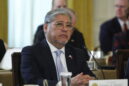
THE PROPOSAL to add one more year to courses in college is not yet final since the Commission on Higher Education (CHEd) is still studying it, CHEd chairman Emmanuel Angeles said yesterday.
Angeles said a technical committee is still reviewing the proposed reform to add another year to college courses to put the country’s tertiary education system at par with that of other countries.
“There is nothing definite yet. We are not even sure if we would be able to implement this. It is not yet final,” Angeles said.
He said the technical committee would finish its review by next month and, stating in March, CHEd would conduct wide-ranging consultations among the major stakeholders in the country’s education system.
Under the reform program dubbed the “Philippine Main Education Highway,” existing courses requiring licensure exams by the Professional Regulation Commission would last for five years starting this coming school year. And starting 2010, even non-board courses would also be extended by one year.
The program aims to reform the baccalaureate curriculum in the college level and would be implemented following the “10+2+3 formula” or 10 years of basic education, a two-year pre-university program, and then a final three years of specialization.
This means that after completing 10 six years in elementary and four years of high school, students could either proceed to vocational training or take a two-year “pre-university program” before finally taking their specialized courses.
The reform program was supposed to be rolled out in two phases with Phase I beginning this coming school year (2009-2010) and affecting courses with PRC licensure exams.
Engineering and Architecture programs would follow the 10+2+(3 or 4) scheme in accordance with the standards set by international accrediting bodies for these fields. The other courses that would be affected during Phase I include Accounting, Occupational Therapy, Physical Therapy, and Pharmacy.
Angeles added that nursing actually now takes five years since nursing students are required to take summer classes.
Phase II, which was supposed to take take effect starting school year 2010-2011, would require all four-year board and non-board programs to follow the 10+2+3 system, which is in accordance with the Bologna Accord, a sweeping educational reform program in Europe that would take effect also in 2010.
All of these, however, might be put on hold depending on the results of the review by the CHEd technical committee and the consultations that would be held later this year. INQUIRER