





Davaoeña helps shape a new Korea
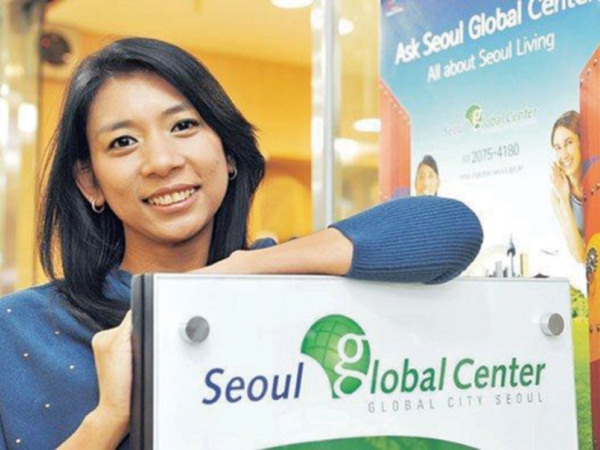
JASMINE Lee made history as the first Filipino-Korean elected to South Korea’s National Assembly last April. Facebook profile photo
SEOUL, South Korea—Jasmine Lee realizes just how Korean she’s become when she breaks out in the language, forgetting that her Filipino mother on the other end of the phone can’t understand her. But she is reminded of the limits of assimilation when Koreans, impressed by her fluency, comment: “You sound more Korean than Koreans do.”
Lee, 35, who was born Jasmine Bacurnay in Davao City, made history in April when she became the first naturalized citizen—and the first nonethnic Korean—to win a seat in South Korea’s National Assembly. Her election reflected one of the most significant demographic shifts in the country’s modern history, a change Lee says “Koreans understand with their brain, but have yet to embrace with their heart.”
Only a decade ago, school textbooks still urged South Koreans to take pride in being of “one blood” and ethnically homogeneous. Now, the country is facing the prospect of becoming a multiethnic society. While the foreign-born population is still small compared with countries with a tradition of immigration, it’s enough to challenge how South Koreans see themselves.
“It’s time to redefine a Korean,” said Kim Yi-seon, chief researcher on multiculturalism at the government-financed Korean Women’s Development Institute. “Traditionally, a Korean meant someone born to Korean parents in Korea, who speaks Korean and has Korean looks and nationality. People don’t think someone is a Korean just because he has Korean citizenship.”
Among the factors driving this development is the influx of women from Southeast Asia who have come to marry rural South Korean men who have difficulty attracting Korean women willing to embrace country life. The number of marriage migrants grew to 211,000 last year from 127,000 in 2007, most of them women from Vietnam and other poorer Asian countries drawn to a better life in South Korea.
In industrial towns, young men from Bangladesh and Pakistan toil at jobs shunned by Koreans as too dirty and dangerous, providing cheap labor that South Korea’s export-driven economy needs to compete with China. The number of such workers almost doubled to 553,000 last year from 260,000 in 2007—not counting those who overstay their visas and work illegally.
Multicultural future
One of every 10 marriages in South Korea now involves a foreign spouse. Although overall numbers of schoolchildren in South Korea have been declining—to 6.7 million this year from 7.7 million in 2007—as a result of one of the world’s lowest birth rates, the number of multiethnic students has been climbing by 6,000 a year in the same period.
“A multicultural society is not just coming; it’s already here,” Lee, a member of the governing Saenuri Party, said in an interview at her office in the National Assembly.
Still, her election exposed how far South Korea remains from that ideal, suggesting a rough road ahead as it grapples with the demographic changes.
Challenges
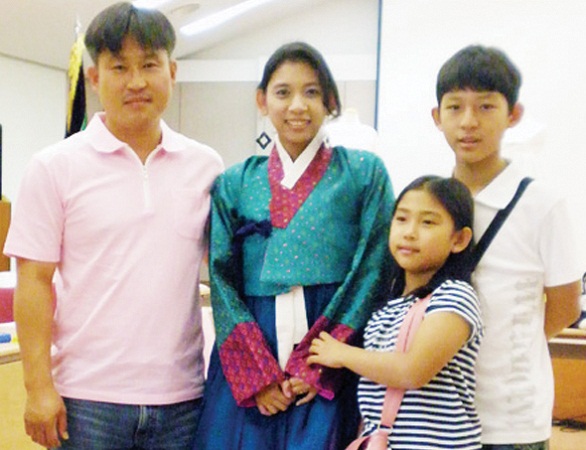
MULTICULTURAL KOREAN FAMILY Lee with her late husband, marine officer Lee Dong-ho, and their two children. LEE FAMILY FILE
After Lee’s election, anti-immigration activists warned that “poisonous weeds” from abroad were “corrupting the Korean bloodline” and “exterminating the Korean nation” and urged political parties to “purify” themselves by expelling Lee from the National Assembly.
Prime Minister Kim Hwang-sik has condemned such xenophobic outbursts as “pathological,” and he urged South Koreans to take the transition to a multicultural society “not as a choice, but as an imperative.”
The role of ethnicity in South Koreans’ self-image explains why they take such pride in the success of ethnic Koreans abroad, like the new president of the World Bank, the Korean-American Jim Yong Kim. It also explains why they considered it a national shame that a Korean-born United States resident, Seung-Hui Cho, 23, killed 32 people in a shooting rampage at Virginia Tech in 2007 before killing himself, even though he had emigrated with his family when he was 8.
Given this cultural backdrop, Korean policymakers face a difficult task integrating multiethnic families while avoiding the social and economic turmoil often blamed on immigrants elsewhere.
Redefining the nation
“They bring religious and ethnic strife to our country, where we had none before,” said Kim Ky-baek, publisher of the nationalist website Minjokcorea and a critic of the government’s policy of admitting and providing social benefits to foreign-born brides and migrant workers. “They create an obstacle to national unification. North Korea adheres to pure-blood nationalism, while the South is turning into a hodgepodge of mixed blood.”
The challenge for South Korea is whether it can “redefine the nation, embracing people who do not share the same blood into a broader Koreanness,” said Chung Ki-seon, senior researcher at the IOM Migration Research and Training Center.
Jasmine Lee has witnessed South Korea’s demographic evolution firsthand.
Seaman spouse
In 1994, while a college student, she met her future husband, Lee Dong-ho, a second mate on a South Korean freighter, when he walked into her parents’ shop in Davao, in the southern Philippines. He sent letters and gifts from ports around the globe. When they married in 1995, she was the only foreigner in their neighborhood in Seoul. (Her husband died in a drowning accident in 2010.)
In 1995, Lee had trouble finding an affordable institution in Seoul where she could study Korean as a second language. Now that the government has recognized a multicultural society as the country’s future, it has introduced or sponsored a slew of programs and centers, now numbering more than 200, to assist migrants and their children. The national and local governments provide child-care subsidies and discounts at wedding halls. Instructors visit multicultural families to teach them Korean at government expense.
And this year, for the first time, South Korea began accepting multiethnic Korean citizens into its armed forces. Previously, the military had maintained that a different skin color would make them stand out and hurt unity.
But if government support has improved, Lee says that popular sentiment seems to have cooled. Korean men who sponsored foreign women as brides, only to find themselves abandoned by women who exploited them to immigrate and work in South Korea, have organized against the government’s multicultural policy. Meanwhile, low-income Koreans accuse migrant workers of stealing their jobs.
The government itself stands accused of fostering xenophobia by requiring foreigners who come to South Korea to teach English to undergo human immunodeficiency virus tests while not requiring the same of South Koreans in the same jobs. Last year, an Uzbek-born Korean made news when she was denied entry to a public bath whose proprietor cited fear of HIV among foreigners.
Fair and open society
“Back in 1995, people adored me for saying ‘hello’ and ‘thank you’ in Korean, though that was practically the only Korean I knew,” Lee said. “Beginning around 2000, however, people started looking at me suspiciously. On the bus, they’d ask, ‘Why are you here?”’
Lee said she used to avoid parent-teacher conferences at her son’s school for fear he would be bullied if other students learned of his multiethnic roots. There were many news reports to justify her fear.
Lee says it was her desire to see her children—she also has a daughter—live in a fair and open society that drew her first to television and then politics. Thanks to her language skills and looks, she landed roles in movies and became a regular on a TV program that focuses on multicultural families.
But Lee thinks South Korea still has a long way to go.
“In a recent program supposedly aimed at fostering multicultural harmony, organizers divided participants into one bus for ‘Koreans’ and another bus for ‘multicultural families,’” she said. “I envision a society that doesn’t need a label like ‘multicultural.”’ New York Times News Service


