
Quantcast
Latest Stories

Japan, SoKor, Australia to help PH improve defense capability – DFA
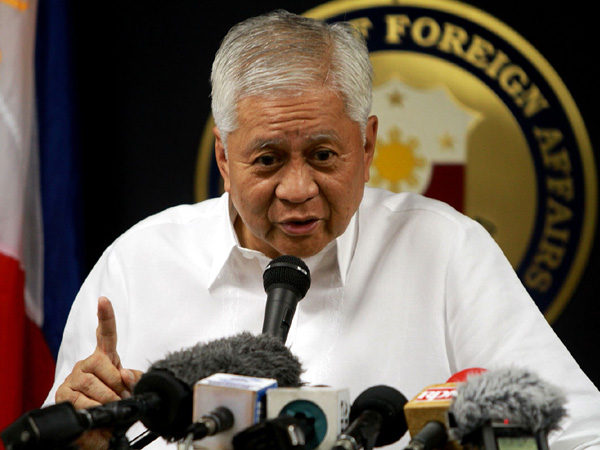

Alberto del Rosario

Foreign Affairs secretary Alberto del Rosario. INQUIRE file photo

MANILA, Philippines — Aside from the United States, at least three other countries – Japan, South Korea and Australia – are helping the Philippines establish a minimum credible defense posture to complement its diplomatic capacity in dealing with its territorial disputes with China in the West Philippine Sea (South China Sea).

Foreign Affairs Secretary Albert del Rosario pointed this out over the weekend as he also disclosed that the Tokyo government is likely to provide the country with 12 patrol boats.

“They’re considering 10 forty-meter patrol boats on ODA (Official Development Aid) and two larger ones as grants,” Del Rosario told the Philippine Daily Inquirer

In a text message, he also said: “Regarding South Korea, we have a logistics agreement and we have received equipment, such as vests and helmets (for the Armed Forces of the Philippines).”

“I understand our defense department is looking to possibly purchase aircraft from there,” according to Del Rosario.

In November, President Benigno Aquino III asked visiting South Korean President Lee Myung-bak for aircraft, patrol boats and other hardware to help boost the country’s military amid then rising tensions with China over the Spratlys Islands.

Lee did not disclose any response to the specific request but said Seoul wanted to help Manila resolve its maritime problems.

From Australia, the Department of Foreign Affairs head said the country could expect to get “a number of vessels for search-and-rescue, as well as significant training here and abroad for large numbers of our military (personnel).”

“We expect increased help (from the Australian government) when the Status of the Visiting Forces Agreement (or SOFVA between Manila and Canberra) is ratified, hopefully this week,” said Del Rosario.

The SOFVFA, which covers the “status of visiting forces from each state while in the territory of the other state,” was signed on May 31, 2007 in the Australian capital by then Defense Secretary Hermogenes Ebdane Jr. and his counterpart Defense Minister Brendan Nelson.

The signing of the bilateral pact was witnessed by then President Gloria Macapagal-Arroyo and then Australian Prime Minister John Howard.

Last week, Defense Secretary Voltaire Gazmin confirmed reports that the Philippines would acquire at least 10 patrol boats from Japan. However, he declined to discuss with reporters details of the acquisition still in progress.

Coast Guard head Vice Admiral Edmund Tan said they have been negotiating a loan for the acquisition of the vessels.

Meanwhile, the AFP chief of staff, Lt. Gen. Jessie Dellosa, said the process of building a credible defense for the country has been moving fast, with the Navy’s acquisition of a second Hamilton-class cutter from the US.

The first such acquisition, the BRP Gregorio del Pilar, figured in the early part of the standoff between the Philippines and China over the Scarborough Shoal in the West Philippine Sea, which Manila calls Bajo de Masinloc and Panatag Shoal.

On the other hand, Beijing refers to the rock formation as Huangyan Island.

Del Rosario has repeatedly said “we have committed ourselves to improve our national defense by building a minimum credible defense posture” as he also stressed the need to protect national sovereignty.

“Given the country’s lack of resources, it behooves us to proactively seek the assistance and cooperation of our various international partners to achieve this minimum credible posture, which is a fundamental attribute of any sovereign country,” he also said.

According to Del Rosario, the “defense track” is part of the DFA’s comprehensive overall plan in promoting national security.

This year, the Philippines would be receiving about $144.66 million (about P6.25 billion) in defense assistance from the US, he said.

Aside from the delivery of a second Coast Guard cutter, “negotiations are likewise underway for more defense articles, including newer air assets for the Philippine Air Force. We also successfully secured funding in the amount of $53 million (about P2.3 billion) for radar systems to be used by the Coast Guard Watch Council for enhanced maritime domain awareness.”

He said Manila has been upgrading its defense partnership with Washington under the two allies’ Mutual Defense Treaty, citing changes in the regional and global security environment.

Del Rosario emphasized their focal point for cooperation has been to “increase our capacity for territorial defense and maritime security.”

Aside from the defense track, he also referred to the DFA’s diplomatic or political track, where the country would continue to push for the transformation of the West Philippine Sea into a Zone of Peace, Freedom, Friendship, and Cooperation, or ZoPFFC.

Under the ZoPFFC, Manila would observe a rules-based approach to all disputes in accordance with the United Nations Convention on the Law of the Sea (UNCLOS).

For the legal track, the DFA plans to continue coordinating with other concerned government agencies as it resorts to dispute settlement mechanisms under UNCLOS.

According to Del Rosario, “there are five of them and we’re assessing which one is best for us, one that will serve our purpose well.”

Scarborough Shoal lies north of the Spratlys and 124 nautical miles west of Zambales province.

Both asserting their territorial claim to the shoal, Manila and Beijing have refused to recall their vessels from the area.

China has violated the Asean Declaration on the Conduct of Parties “for not allowing us to enforce our laws in the country’s 200-nautical mile Exclusive Economic Zone,” according to Del Rosario.

The Philippines earlier filed a protest with the UN, challenging China’s nine-dash claim that encompasses the whole West Philippine Sea.

Last month, Manila asked the Association of Southeast Asian Nations (Asean) to take a stand on its dispute with China over the Scarborough Shoal.

Del Rosario asserted that “all, not just the Philippines, will ultimately be negatively affected if we do not take a stand.”

He observed “if you take a good look, it appears to us that China wants to establish the rules. Obviously, there’s a negative implication for everyone, not just the Philippines.”

Asked if they would ask the US government’s help in resolving the conflict, he said they “would want all nations to make a judgment as to what’s happening there and what the implications are to their own countries.”

He claimed Washington has already taken a “very constructive role” in resolving the Spratlys dispute, when it pushed for the application of international law in solving the problem.


Follow Us


Follow us on Facebook Follow on Twitter Follow on Twitter


Recent Stories:

Complete stories on our Digital Edition newsstand for tablets, netbooks and mobile phones; 14-issue free trial. About to step out? Get breaking alerts on your mobile.phone. Text ON INQ BREAKING to 4467, for Globe, Smart and Sun subscribers in the Philippines.

Tags: Albert Del Rosario , China , Defense , Department of Foreign Affairs , Diplomacy , Foreign affairs , geopolitics , Global Nation , International relations , Military , Philippines , Spratly Islands Scarborough Shoal , territorial disputes , Territories , United States

  • filam_88

    China rejects Philippines’ call for international arbitration

    Beijing, Apr 26 ,2012, (PTI) :

    China today said it would not accept any
    international arbitration in its dispute with Philippines over an area
    in the South China Sea, rejecting Manila’s call for approaching an
    international court to settle the dispute.Chinese
    Foreign Ministry Spokesman, Liu Weimin, said that the concerned island
    was an “inherent territory” of China and Philippines should accept its
    jurisdiction over it.”The Huangyan island is China’s inherent
    territory. There is no such an issue like referring it to international
    court or international arbitration,” Liu Weimin told a media briefing
    here today.”The involvement of international agency in the issue
    of territorial sovereignty or maritime interests and rights should
    follow procedures and regulations. Playing up wishfully will not
    solve the current situation,” he said, reacting to Philippines’ call to
    accept international arbitration.Philippines, that calls the
    uninhabited island as Scarborough Shoal, has already approached the
    International Court of Justice in Hague.The navies of the two countries has had a stand-off in the disputed area over the past several weeks.Liu
    said China’s claim is based on the fact that it is the earliest country
    to discover and name it, besides exercising sovereignty over it.He
    said Philippines had not objected to Chinese claims until 1997 and has
    even said the island is outside its territorial jurisdiction.Its
    only claim that the island has formed a part of the Exclusive Economic
    Zone is not justified by any international law and does not comply with
    any UN convention of law of the seas, he said.The Philippines
    said today that it would seek more US military help and wants the United
    States to help it achieve a “credible” defence system.

    If China has the sovereignty over the Scarborough Shoal and the Spratlys, then it should be confident to justify its claim to the International Court of Justice, UNLESS their claim is BASELESS AND GROUNDLESS.

    WHY IS CHINA SCARED OF THE INTERNATIONAL COURT? TELL ME PLEASE

  • filam_88

    China justified her exaggerated claim on the South China Sea by
    arguing that ancient Chinese texts mentioned certain islands in the
    South China Sea, proving that Chinese people were the first to navigate
    that sea and the first to discover the islands in the area, that China
    was the first country to exercise jurisdiction over the islands and that
    the South China Sea was China’s historic water. China further argued
    that in 1947, when China published a map of that sea with an eleven-dash
    line (predecessor of the nine-dash line), nobody protested, proving
    that the world had accepted China’s claim. However, close examination
    shows that China’s arguments are baseless.

    First, in 1947, the
    world did not react to the map of the South China Sea with the
    eleven-dash line because the world ignored that map. That map carried as
    much legal weight as the traditional Chinese political thought which
    said that the world (All-under-heaven) is under the authority of Chinese
    emperors. Can China argue that the world had accept China’s sovereignty
    over the world because nobody protested when the Chinese emperors
    declared that the world is under their authority ? .

    Second,
    countries that had historical border with the Arctic Ocean formed the
    Arctic Council to divide the Arctic natural resources according to the
    rules of UNCLOS. China never had any historical border with the Arctic
    Ocean, yet China asked to join the Arctic Council in order to have a
    share of Arctic natural rersources, arguing that the Arctic Ocean is a
    “common heritage for all of humankind”. If the Arctic Ocean is a “common
    heritage for all of humankind”, then the South China Sea is a common
    heritage for all the peoples who live on its shores, not only for China.

    Third,
    peoples of the Austronesian language family, more specifically the
    Malayo-Polynesian branch, were the first to navigate the South China
    Sea. Their original homelands were Southern China or Taiwan. Between
    5000-2500 BC, they crossed the South China Sea to populate the
    Philippines, Indonesia and Malaysia. From Southeast Asia, they crossed
    the Pacific Ocean to populate Melanesia and Micronesia by 1200 BC,
    Polynesia by 1000 BC, Easter Island by 300 AD, Hawaii by 400 AD and New
    Zealand by 800 AD. They also crossed the Indian Ocean to populate
    Madagascar by 0-500 AD. The Indo-Pacific maritime space, including the
    South China Sea, was their historic water. Since the Austronesian
    peoples (ancestors of the Filipinos, Indonesians and Malaysians) were
    the first to navigate the South China Sea, they were the first to
    discover the islands in the area and to fish in the associated waters.
    Though they did not invent writing to record their discovery, it would
    be ludicrous to deny their discovery of the islands so close to the
    Philippines and Indonesia in light of the fact that they were able to
    discover the various islands in the vast Pacific Ocean. By the way, they
    have been displaced or reduced to aboriginal minority status in their
    original homelands.

    Fourth, the South China Sea has always been an
    international waterway since prehistory. Indian traders navigated that
    sea early in prehistory, introducing Indian philosophies to Southeast
    Asia, leading to the formation of many Indianised states on Islands
    Southeast Asia in ancient time. One of those states was Srivijaya,
    located on Indonesia in the 7th century and exercised prominent maritime
    activities in the South China Sea. During ancient time, the influence
    of Chinese civilization on Southeast Asia was limited to Vietnam whereas
    the influence of Indian civilization was dominant throughout Islands
    Southeast Asia, indicating Indian traders were very active in the South
    China Sea. Persian and Arab traders also navigated that sea, introducing
    Islam to Indonesia and the Philippines. The Arabs even settled in
    Guangzhou during the 7th century. A 7th-century Chinese monk, I-Tsing,
    went pilgrimage to India by embarking at Guangzhou on a Persian ship,
    stopped over at Srivijaya before continued onto India.

    Fifth, even
    if Chinese people were the first to navigate the South China Sea (not
    true), China cannot claim sovereignty over the water that is used by
    many other countries. The Philippines, Indonesia and Malaysia do not
    claim sovereignty over the South China Sea, the Indian Ocean and the
    Pacific Ocean even though their Austronesian ancestors were the first to
    navigate those waters. Norway does not claim sovereignty over the
    Norwegian Sea even though the Norsemen (Vikings) were the first to
    navigate that water to populate Iceland and Greenland in the 9th
    century. Portugal does not claim sovereignty over the water off the West
    African coast, the water around the Cape of Good Hope and the Indian
    Ocean even though Portuguese under Bartolomeu Diaz and Vasco da Gama
    were the first to navigate those waters in 1488 and 1498. Spain does not
    claim sovereignty over the Atlantic Ocean, the Magellan Strait and the
    Pacific Ocean even though Spaniards under Christopher Columbus and
    Ferdinand Magellan were the first to navigate those waters in 1492 and
    1521. Russia does not claim sovereignty over the Bering Sea even though
    Russians under Vitus Bering were the first to navigate that water in
    1741.

    Sixth, ancient Chinese texts which mention the South China
    Sea islands do not describe discovery of the islands but only describe
    general knowledge about the islands, knowledge shared among the
    fishermen, merchants and pirates from various countries who navigated
    that sea since prehistory. Chinese writers were the first to write about
    the South China Sea islands because China invented writing earlier, not
    because Chinese people were the first to navigate that sea or the first
    to discover the islands. This principle is illustrated by the Sea of
    Japan and the Black Sea.
    Japan first appeared in written records
    in 57 AD in China’s Book of the Later Han as followed: “Across the sea
    from Lelang were the people of Wa”. Lelang was a Han Empire’s military
    outpost in Korea and Wa referred to Japan. The sea between Lelang and Wa
    is now known as Sea of Japan. Chinese writers were the first to write
    about Japan and Sea of Japan because China invented writing early, not
    because Chinese people were the first to navigate the Sea of Japan or
    the first to discover Japan. Korean and Japanese peoples lived by the
    Sea of Japan since prehistory and sailed into that sea to fish and to
    trade with each other, and knew about the existence of each others since
    prehistory, long before Chinese writers wrote about Japan and Sea of
    Japan.
    The Black Sea first appeared in written records in 5th
    century BC in the writing of the Greek poet Pindar as “Pontos Axeinos”.
    By the 5th century BC, the Greeks had established many colonies by the
    Black Sea. Greek writers were the first to write about the Black Sea
    because Greece invented writing early, not because Greeks were the first
    to discover or the first to navigate the Black Sea. There were other
    peoples who lived by the Black Sea alongside with the Greeks and had
    sailed into that water to fish and to trade since prehistory, even
    though they did not invent writing to write about that. The Black Sea,
    like the South China Sea, is a common heritage for all the peoples who
    live on its shores.

    Seventh, ancient Chinese texts which mention
    the South China Sea islands mention those islands as foreign lands, not
    as China’s territories, and do not describe which activities the
    authority of ancient China exercised on the islands. Therefore, there is
    no proof of China’s jurisdiction over the islands. In the case of
    Scarborough shoal, China argued that Kublai Khan’s officials were the
    first to map out and to establish jurisdiction over those islands in
    1279. However, Kublai Khan was the Great Khan of the Mongol Empire who
    conquered China. If any country can inherit Scarborough shoal from
    Kublai Khan, it is Mongolia, not China.
    In 1279, Kublai Khan’s
    officials neither “discovered” nor “established jurisdiction” over
    Scarborough shoal because that place was already the historic water and
    traditional fishing ground of Filipino fishermen, descendants of the
    Austronesian sailors who navigated the South China Sea and populated the
    Philippines in 5000-2500 BC. Scarborough shoal was known as “bajio de
    Masinloc”, meaning shoal of Masinloc, in a Spanish-made map of the
    Philippines in 1734. Masinloc is not a Spanish word and is the name of a
    municipality on the Philippines’ main island, confirming that Filipino
    fishermen had been to and had named the islands after their own tongue
    for centuries.

    Eighth, official maps of the Yuan Dynasty and Ching
    Dynasty, including but not limited to Da Qing Zhi Sheng Quan Tu
    (published in 1862) and Huang Chao Yi Tong Yu Di Zen Du (published in
    1894), show that the southernmost extent of China ends at Hainan islands
    (see below).

    Finally, the Chinese empire originated on the Yellow
    river basin and eventually conquered many lands and peoples, including
    Tibet and Sinkiang, which is why China is a multiethnic, multi-languages
    country. At the time when China allegedly discovered the South China
    Sea islands, China’s border on the mainland was not what it is today,
    Tibet and Sinkiang were independent countries of the Tibetans and the
    Uyghurs, respectively. The Tibetans and the Uyghurs are demanding
    self-determination. Three dozens Tibetan monks have burned themselves to
    death to draw attention of humanity to the sufferings of their people
    under China’s rule. If China is serious about its historical claim, it
    should return to its historical border on the mainland, return Tibet and
    Sinkiang to the Tibetans and the Uyghurs, respectively.

    China
    knows that her arguments for claiming sovereignty over the South China
    Sea and all the islands in that water are baseless, which is why China
    refused the Philippines’ invitation to submit the dispute to an
    international court.
     

  • filam_88

    No Country Supports Chinese 9 Dash Line Either.

    USA, SOUTH KOREA, JAPAN, INDONESIA, AUSTRALIA, SPAIN AND INDIA RECOGNIZE PHILIPPINE SOVEREIGNTY

    RUSSIA –
    March 13, 2012: Russia Pronounce its support to the Philippines over Spratly disputes with china and other claimants.  Philippines
    – Russia is supporting the Philippines’ stand that RULES based on
    transparency and diplomacy should be used to resolve maritime issues.

    EUROPEAN UNION
    EU-Asia Center director Fraser
    Cameron said during a forum in Manila that the EU supports a rules-based
    international system and liberty of navigation. The EU believes that territorial disputes should be resolved “in
    accordance with international law through peaceful and cooperative
    solutions.”

    NEW ZEALAND
    New Zealand backs Philippine position on Spratlys

    New Zealand supports the position of the Philippines and other allies
    that claimants to the Spratly chain of islands must heed the United
    Nations Convention on the Law of the Sea (UNCLOS), the Department of
    National Defense said Friday.

    MALAYSIA
    Malaysia backs Philippines in dispute vs China

    Malaysia is supporting the Philippines’
    stand that Manila’s dispute with China over ownership of Scarborough
    shoal should be resolved based on the United Nations Convention on Law
    of the Sea (UNCLOS), Vice President Jejomar Binay said Tuesday.

    VIETNAM BACKS THE PHILIPPINES
    1) Support for the “sovereign rights” of the Philippines in the Scarborough Shoal.
    2) Opposition to China’s use of the “nine-dashed line”  to make
    overlapping claims with the Exclusive Economic Zones and continental
    shelves of the Philippines, Vietnam and other ASEAN countries, as well
    as opposition to “China’s actions and threats of force,” the latter
    presumably referring to articles in China’s state controlled press.
    3) Support for the Philippines’ proposal to submit the dispute at
    Scarborough Shoal to the International Tribunal for the Law of the Sea
    (ITLOS).

    JAPAN
    President Benigno Aquino III on Tuesday night secured Japanese Prime
    Minister Yoshihiko Noda’s support for a peaceful resolution of the
    six-nation dispute over the potentially oil-rich Spratly islands.
    Following the meeting, the President and Noda “confirmed that freedom of
    navigation, unimpeded commerce, and compliance with established
    international law including the UNCLOS and the peaceful settlement of
    disputes serve the interests of the two countries and the whole region.”
    UNCLOS refers to the UN Convention on the Law of the Sea.

    AUSTRALIA
    Australia said those involved in the territorial dispute — Brunei,
    China, Malaysia, Philippines, and Taiwan — should adhere to the United
    Nations Convention on the Law of the Sea (UNCLOS), which codifies the
    international law of the sea.

    Australia’s expression of support came less than a week after Washington expressed its support to Manila over the same issue.

    USA
    International Law Should be Used.
    U.S. Secretary of State Hillary Clinton on Thursday pledged to
    support the Philippines amid growing tensions between China and its
    neighbors in disputed areas of the South China Sea (or West Philippine
    Sea). 

    No country supports China’s 9 dash line.

    They want LEGAL INTERNATIONAL LAWS TO BE USED!


Copyright © 2013, .
To subscribe to the Philippine Daily Inquirer newspaper in the Philippines, call +63 2 896-6000 for Metro Manila and Metro Cebu or email your subscription request here.
Factual errors? Contact the Philippine Daily Inquirer's day desk. Believe this article violates journalistic ethics? Contact the Inquirer's Reader's Advocate. Or write The Readers' Advocate:
c/o Philippine Daily Inquirer Chino Roces Avenue corner Yague and Mascardo Streets, Makati City, Metro Manila, Philippines Or fax nos. +63 2 8974793 to 94
Advertisement
  1. Aquino bares AFP buildup vs ‘bullies in our backyard’
  2. Taipei releases satellite record, rejecting Manila’s claim
  3. Taiwan reporter sacked over Philippine hoax
  4. To those who say Filipinos are stupid
  5. Santiago: Harassment of Filipinos in Taiwan may warrant MECO abolition
  6. Aquino: We can fight back vs any threat
  7. Video of Taiwanese fishing vessel shooting ‘revealing,’ ‘helpful’ — De Lima
  8. Saudi, PH ink pact on workers
  9. How to deal with ‘unli-give me’ from relatives
  10. Chinese, Taiwanese tourists held in Ilocos
  1. Santiago: Harassment of Filipinos in Taiwan may warrant MECO abolition
  2. Aquino bares AFP buildup vs ‘bullies in our backyard’
  3. Filipinos no longer welcome in Taiwan restaurants, says Meco exec
  4. Filipinos in Taiwan told: Limit activities
  5. Taiwan stages exercise as PH row rumbles on
  6. Philippines faces 2nd wave of Taiwan sanctions
  7. Aquino apologizes for Taiwan fisher’s death
  8. Taipei releases satellite record, rejecting Manila’s claim
  9. To those who say Filipinos are stupid
  10. Why are there so many Filipino nurses in the US?
  1. Santiago: Harassment of Filipinos in Taiwan may warrant MECO abolition
  2. Filipino bride, 4 others killed in California limousine fire
  3. Aquino bares AFP buildup vs ‘bullies in our backyard’
  4. Why are there so many Filipino nurses in the US?
  5. US Senate Bill allows thousands of Filipinos to immediately come to America
  6. Filipinos no longer welcome in Taiwan restaurants, says Meco exec
  7. Taiwan rejects PH apology, freezes hiring of Filipino workers
  8. Filipinos in Taiwan told: Limit activities
  9. China slams PH bid in UN
  10. Filipino-owned supermarket chain opens 12th branch

News

  • Oklahoma tornado victims face daunting task of rebuilding lives
  • Comelec set to proclaim 58 party-list winners
  • Customs agents seize P25M worth of fake medicines
  • Lakas-CMD president eyes House speakership
  • SWS: 600,000 more hungry Filipinos in 1st quarter
  • Sports

  • Thoss out; Chot wants Abueva
  • Arellano stuns San Beda, gains q’finals
  • Ateneo, NU start Shakey’s V-L title duel
  • Upset and triumph in 2013 poll games
  • FEU bet tops rhythmic gymnastics
  • Lifestyle

  • Yellow chicken fast gaining popularity at Wee Nam Kee
  • Chicken mangosteen curry, papaya salad, soft-shell crabs–Thai cuisine reworked for the Filipino palate
  • ‘Turon’ with ‘panocha’
  • Uncommon curry in a Japanese resto
  • Lucban, after Pahiyas: The divine tastes remain
  • Entertainment

  • Ryan Gosling’s violent new crime movie booed at Cannes
  • Soaked, sleepless on Croisette
  • Easier for viewers to relate to
  • Luke Evans: There’s more talent in PH
  • Girl power deftly plays ‘Game of Thrones’
  • Business

  • Asian shares mixed, Tokyo ends at 5-year high
  • Hotels’ bid for tax perks rejected
  • US company eyes coco products from PH
  • Q1 GDP growth seen at 6%
  • PH, Brazil forge air agreement to mount flights
  • Technology

  • Risky behavior starts young on web—survey
  • Office bullying video sparks outcry in Singapore
  • Poll: Teens migrating to Twitter
  • Microsoft readies new Xbox as entertainment hub
  • Yahoo! vows not to ruin Tumblr after $1.1B takeover
  • Opinion

  • Editorial cartoon, May 23, 2013
  • False god
  • When neighbors fight
  • Becoming the world’s most bullied
  • Have a heart
  • Global Nation

  • Senate committee OKs Filipino Veterans Family Reunification amendment
  • Philippines to send probe team to Taiwan
  • PH thanks Taiwan for call to citizens not to harm Filipino workers
  • OFW claims to be Indonesian, skips night-outs to avoid attacks in Taiwan
  • PNP assures safety of Taiwanese visitors in PH
  • Marketplace
    Advertisement
    © Copyright 1997-2013 INQUIRER.net | All Rights Reserved