





Open doors, uneven returns: PH visa generosity not reciprocated


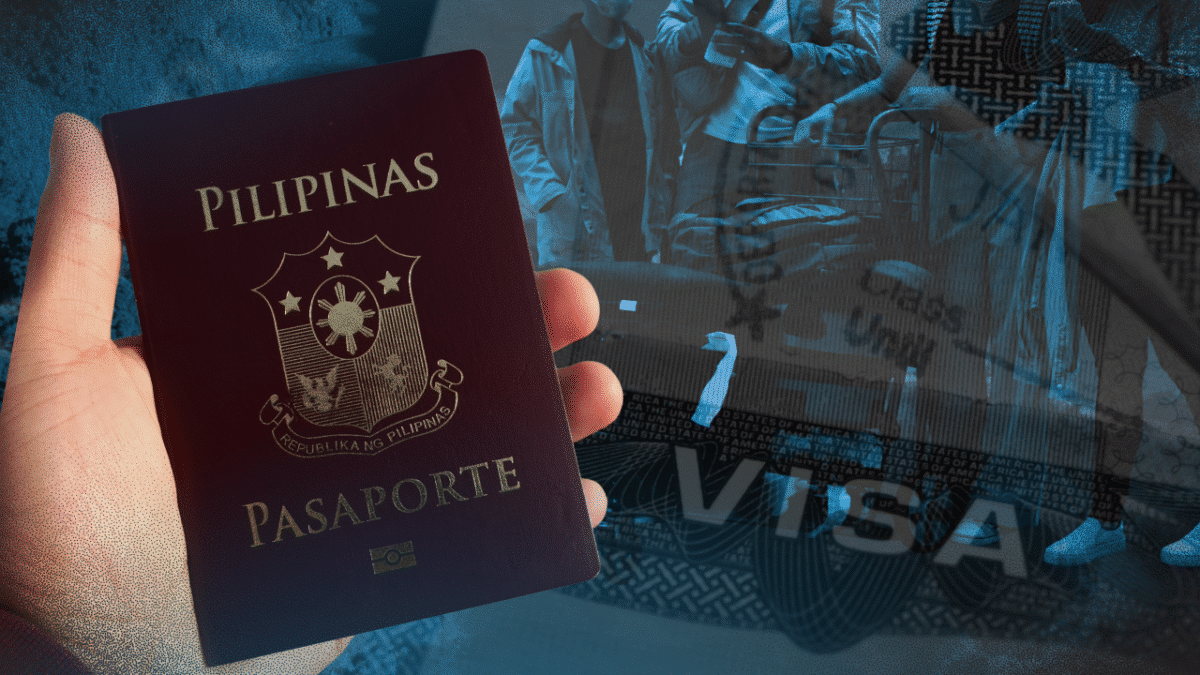
MANILA, Philippines — For years, the Philippines has opened its doors wider than most of its neighbors, easing visa rules, courting new markets and positioning itself as one of Southeast Asia’s most welcoming destinations.
But the numbers raise a tougher question: Is that openness really paying off?
An analysis by Dr. Alicor Panao, Inquirer’s resident data scientist, suggests the answer is more complicated than policy messaging implies.
In the 2026 Arton Capital Passport Index, the Philippines recorded a mobility score of 77, an openness score of 161, and a reciprocity gap of minus 84 — one of the widest in the region.
The reciprocity gap measures the difference between the number of nationalities a country allows to enter easily and the number of countries that grant the same privilege to its citizens.
“The Philippines grants visa-free or visa-on-arrival access to far more nationalities than Filipinos receive in return,” said Panao, who is also an associate professor at the University of the Philippines Diliman.
Compared to its neighbors, the imbalance stands out. Singapore and Malaysia combine high openness with near reciprocity, while Thailand and China maintain relatively balanced visa exchanges. The Philippines, like Indonesia, is generous but sees limited reciprocity.
Openness vs mobility
Visa liberalization has long been part of the Philippines’ tourism strategy. Citizens of 157 countries can enter visa-free, a policy aimed at stimulating arrivals and strengthening regional integration.
In recent years, the government expanded this approach through electronic visas, visa-free entry for select markets, and new permits such as digital nomad visas to attract longer-staying visitors. Officials have said easing entry rules lowers travel barriers and helps the Philippines compete with regional destinations that have aggressively simplified their own visa regimes.
Tourism officials said visa facilitation remains a “decisive factor in capturing travelers from major markets.”
Yet widening access for foreign visitors has not translated into stronger travel freedom for Filipinos. Instead, Panao noted that mobility, or the ability of Filipinos to travel abroad, remains constrained by deeper structural realities.
Explaining the index, he wrote that “under Arton’s methodology, mobility reflects visa-free, visa-on-arrival, eTA, and rapid eVisa access, with visa-free proportions and UNDP Human Development Index (HDI) used to differentiate ranks. This matters.”
“The Philippines’ lower HDI relative to advanced economies can affect tie-break positioning and, more broadly, how destination countries assess migration risk, overstay probabilities, and labor pressures,” he wrote.
HDI, according to the United Nations Development Programme (UNDP), is a summary measure of average achievement in key dimensions of human development: a long and healthy life, being knowledgeable, and having a decent standard of living.
“As a major labor-exporting country, the Philippines is often viewed through the lens of outbound migration rather than short-term tourism, influencing stricter visa regimes abroad,” Panao added.
The imbalance points to a deeper dilemma: Opening the country to more visitors does not necessarily make it easier for Filipinos to travel abroad.
Tourism recovery still uneven
Despite relaxed visa rules, the Philippines continues to lag behind regional competitors in international arrivals.
Tourist arrivals reached 5.24 million in the first 11 months of 2025, still 37% below pre-pandemic levels.
The slower rebound is not new. Earlier analysis by Panao showed the Philippines had already been trailing its neighbors in intra-Asean tourism even before the pandemic.
In 2019, the country recorded just 526,832 intra-Asean visitors, far behind Malaysia’s 17.9 million and Thailand’s 10.8 million. When borders closed, arrivals plunged to only 7,773 in 2021 — one of the sharpest contractions in the region.
Recovery began in 2022, but by 2024, the Philippines had reached only 484,465 intra-Asean visitors, still below its pre-pandemic level.
“In a region where intra-Asean travel has nearly returned to its pre-pandemic scale, the Philippines remains a relative laggard,” Panao said in his earlier analysis.
READ: Philippines lags Asean in tourism rebound
He said the slower rebound reflects structural constraints rather than temporary shocks.
“The Philippine tourism trajectory suggests that recovery has been slower and structurally constrained, possibly reflecting higher travel costs, weaker regional connectivity, or delayed tourism reopening compared with its Asean peers,” he said.
Visa openness may help attract visitors, but the broader travel experience often determines whether they return or choose another destination.
Curtis Chin, a senior adviser at the Milken Institute and a former U.S. ambassador to the Manila-based Asian Development Bank, said travel in the Philippines often feels “more hassle than fun,” pointing to congested airports, weak inter-island connectivity and uneven transport infrastructure.
READ: ‘More hassle than fun’: Philippines struggles to draw tourists
“The Philippines is such a great destination. When I advise people visiting the Philippines, I always say, build in some wiggle room in case your plane is late or if the weather interrupts things,” Chin said.
“But too often, people don’t have an extra three days.”
Reliance on a few markets
Tourism performance is also shaped by dependence on a small number of source markets.
South Korea remains the Philippines’ largest tourism market, but arrivals have fallen amid safety concerns and disruptions from natural disasters.
Erwin Balane, Manila’s tourism attaché for South Korea, said incidents affecting Korean visitors “have eroded traveler confidence and reinforced the belief that the Philippines is less safe than competing destinations in the region.”
Meanwhile, Chinese arrivals remain below pre-pandemic levels due to geopolitical tensions and limited connectivity.
To address the decline, the Philippines granted Chinese nationals visa-free entry beginning Jan. 16 for short tourism and business stays, a move aimed at reviving travel demand and encouraging investment.
The privilege allows eligible visitors to stay for up to 14 days, subject to standard entry requirements, including valid travel documents and confirmed onward tickets.
READ: Chinese nationals get visa-free entry to PH starting Jan. 16

But even with eased visa rules, broader forces — from diplomatic strains to reduced flight capacity — continue to shape the pace of recovery from one of the country’s most important source markets.
Last month, Tourism Secretary Christina Garcia-Frasco reaffirmed support for the national government’s move to remove visa requirements for Chinese tourists and investors visiting the Philippines, despite ongoing territorial tensions.
“It is not the mandate of the Department of Tourism to balance tensions, but rather to promote the Philippines,” she said.
Frasco acknowledged that the country has struggled to fully restore tourist arrivals without the return of Chinese visitors.
READ: Chinese tourists: We need them to recover our numbers — Frasco
“And to be perfectly honest, it has been very difficult to fully recover the numbers of the country without the Chinese market, which is why we are grateful to our President who has directed, through the Department of Foreign Affairs, the institution of visa-free travel coming into the country,” she said.
Frasco earlier acknowledged that regional tensions had affected visitor numbers, saying “nobody could have anticipated that geopolitics would affect tourist arrivals from China,” especially after electronic visas for Chinese nationals were suspended.
She added that this was “in stark contrast to the policies of our Asean neighbors, where Chinese visitors either don’t need a visa or can obtain one upon arrival.”
“Originally, we projected that up to 2 million Chinese tourists would arrive, but by the end of 2024, only a little over 300,000 actually came,” she said.
Domestic tourism carrying the sector
While foreign arrivals remain below pre-pandemic levels, domestic travel has become the main driver of the tourism industry, cushioning the impact of the slower international recovery.
“The Philippines now leads Southeast Asia in terms of domestic tourism expenditure,” Frasco said last year, citing spending of $63.4 billion driven by more than 134 million domestic trips.
“These figures underscore the love of Filipinos for their own country and their vital role in sustaining local destinations,” she added.
Data from the World Travel and Tourism Council (WTTC), cited by the Department of Tourism (DOT), show that domestic spending accounted for a significant share of tourism activity in recent years, helping offset slower growth in foreign arrivals.
Government and industry reports have also noted that local travel demand supported tourism-related businesses across the country during the recovery phase, particularly in destinations that rely heavily on domestic visitors.
Still, analysts have said domestic travel alone cannot fully replace the economic contribution of international tourism, underscoring the importance of restoring foreign visitor flows alongside strengthening the local market.
Beyond visas: The openness paradox
Easing visa rules has been a central pillar of the Philippines’ tourism strategy, but officials and analysts say entry policies alone cannot address deeper structural constraints affecting both tourism competitiveness and global mobility.
Travel advocates have repeatedly pointed to infrastructure and visitor experience as critical factors shaping travel decisions.
“They’re all about promo, promo, promotion. You’re spending lots of taxpayers’ money on these slogans — they keep changing and changing and changing the slogan. How many tourism slogans have we had?” Filipino traveler Riza Rasco said, urging stronger investment in airports, transport systems, and tourism services.
“We’re spending millions on these slogans. You could use all this money for building infrastructure,” said Rasco, who has traveled to more than 200 countries and territories.
READ: Tourists’ clamor: Better infrastructure, not just promos
She added that many visitors encounter difficulties immediately upon arrival.
“First of all, our airports are really embarrassing. The airports in Africa are much better. We really got left behind,” she said.
For Panao, the issue reflects a broader structural imbalance between openness and mobility. The Philippines has adopted relatively liberal entry policies to attract visitors and stimulate tourism, but this has not translated into equivalent travel freedom for Filipinos abroad.
“Economically, high openness can attract visitors, but weak mobility limits Filipino entrepreneurs, students, and workers,” Panao said.
He said the imbalance reflects deeper structural asymmetry.
“The gap may therefore stem from structural asymmetry — the Philippines pursues openness to stimulate tourism and regional integration, while wealthier states calibrate entry rules based on income differentials, irregular migration concerns, and geopolitical leverage,” he said.
He added that the country’s wide reciprocity gap reflects deeper structural realities shaping travel access.
“While the Philippines opens its doors to the international community, structural realities leave Filipinos struggling for equal footing in global mobility,” Panao said.
The findings point to a broader dynamic shaping the country’s place in global travel. Openness has helped position the Philippines as one of the region’s most accessible destinations, yet structural constraints continue to influence both tourism performance and passport mobility.
As regional travel expands and competition intensifies, how the Philippines addresses these deeper gaps may determine whether its visa openness becomes a lasting advantage — or remains an imbalance between welcoming the world and gaining equal access beyond its borders.


