


Nato tests war preparedness on eastern flank facing Russia


ALBA LULIA, Romania — On the Mures river in central Romania, French armored vehicles and Romanian trucks board a motorized floating bridge, part of a large military exercise to showcase Nato’s ability to rapidly increase force levels on its eastern flank facing Russia.
The drill — planned for months and seen as an “integration exercise” for Nato members — comes after Washington last week said it would pull some troops out from the area.
Romania, which shares some 650 kilometers (400 miles) of border with Ukraine, has gained in strategic importance since Russia invaded its neighbour in 2022.
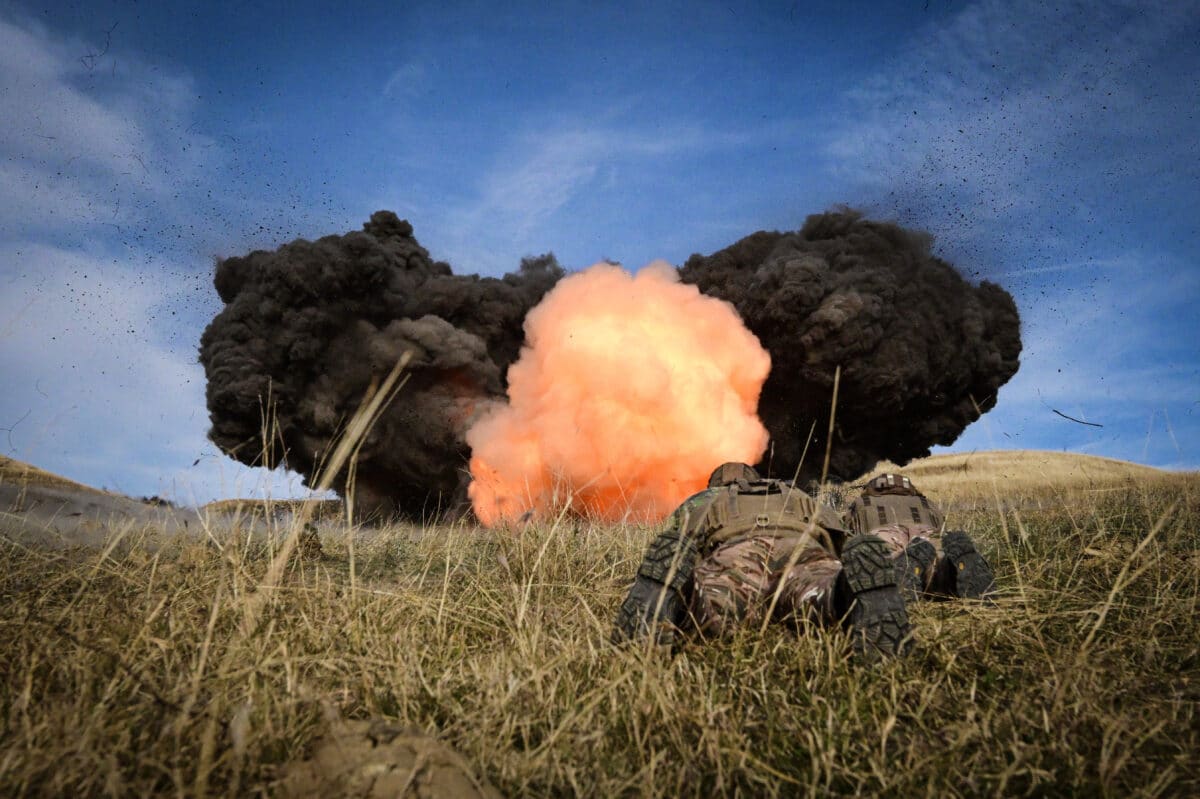
In the Dacian Fall exercise from October 20 to November 13, French-led troops from Belgium, France, Luxembourg, and Spain are engaged in manoeuvres and live-fire artillery and tank drills, together with Romanian soldiers.
Since Moscow’s full-scale invasion of Ukraine, Paris has deployed nearly 1,500 soldiers in Romania and doubled them for the exercise. In case of a crisis, this can be increased to 5,000 troops.
“We must demonstrate our ability to integrate into a Nato division,” said French General Maxime Do Tran, commander of the 7th Armoured Brigade deployed for Dacian Fall.
The exercise, conducted across Romania, follows “Nato’s real defense plans” and serves to signal the alliance’s “strategic solidarity,” he added.
While French army engineers skilfully dock the massive motorised barge on the banks of the Mures during one exercise, 200 meters (220 yards) away, Romanian engineers speedily put up a pontoon.
The French and Romanian teams will then switch roles.
“In Europe, there’s a watercourse every 20 to 30 kilometers; crossing is a complex skill that had somewhat been lost,” said Colonel Jerome Paris, head of the French engineering detachment.
READ: Russia says Ukraine peace talks frozen as Nato bolsters defenses
‘It’s an integration exercise’
About 60 kilometres to the north, amid sun-scorched grassy hills, Romanian General Dorin Toma, who commands Nato troops in Romania and Bulgaria, observes French engineers destroying obstacles identified by small quadcopter drones.
“It’s an integration exercise,” he said, adding that at the end of a two-year cycle to integrate forces, “we’re in a very good position.”
The challenge is to maintain the level as “people are changing, weapons systems are changing.”
“We need to keep the pace,” he said.
On Washington’s announcement that it would pull some troops out from Nato’s eastern flank, General Toma said that from “a military standpoint, it changes nothing” given how the United States showed in 2022 that they were ready to deploy significant resources to the country at short notice.
Washington has denied that its announcement amounted to a US withdrawal from Europe.
Romania’s defence ministry said last week that 900-1,000 US soldiers would remain, down from about 1,700 currently deployed.
‘Military Schengen’ needed
Transporting equipment to Romania was a complex logistical operation that faced administrative hurdles.
For each country crossed, every license plate must be specified in documentation along with the names of personnel in the convoy, which has to be escorted by local police.
NATO mechanisms exist to “lower administrative and customs barriers” in case of conflict, French Lieutenant Colonel Alexis said, adding that there was no “military Schengen” allowing for free movement of equipment.
The French military prohibits, with some exceptions, the publication of the surnames of its staff.
“Mobility corridors” with clearly identified routes and streamlined administrative procedures are a solution.
The Netherlands, Germany, and Poland are setting up one from North Sea ports to the Belarusian border.
“Harmonisation is underway, but it takes time,” Lieutenant Colonel Alexis said.


